What items are banned from roll-off dumpsters?
The short list: hazardous chemicals, anything flammable, electronics with batteries, tires, and appliances holding refrigerant like old fridges or window AC units. Add asbestos siding, medical sharps, and any liquid waste over a few gallons. Renting a roll-off dumpster in Santa Maria means the hauler has to sort every load by hand at the landfill, and banned material can shut that process down. A 10 yard dumpster fills fast on a kitchen tear-out, but paint cans and old propane bottles from the garage still need a separate trip. Bigger jobs using a 20 yard dumpster or a 30 yard dumpster run into the same rule on a larger scale, just with more material to sort beforehand. If you are clearing a whole property, check dumpster weight limits too, since banned items are often also the heaviest ones. When in doubt on a specific item, call before loading rather than after.
Why does it matter what goes in the dumpster?
It matters because contamination gets a load rejected at the transfer station, and that fee lands on the renter, not the hauler. A single car battery or a can of unused paint mixed into a load of drywall scraps can force a full re-sort. Santa Maria Porta Pros flags these issues on delivery so the crew on a construction dumpster rental knows what to separate before the truck ever gets loaded. This ties directly to broader jobsite rules too. OSHA 1926.252 covers disposal of waste materials including chutes and enclosures, and OSHA 1926.25 requires scrap and debris to be cleared from work areas as the job progresses, not left to pile up. Neither rule lists what is hazardous, but both assume the crew knows the difference between construction debris and material that needs a hazardous waste run. A quick look at dumpster sizes and dimensions helps plan volume once the banned stuff is already set aside.
What about paint, oil and chemicals?
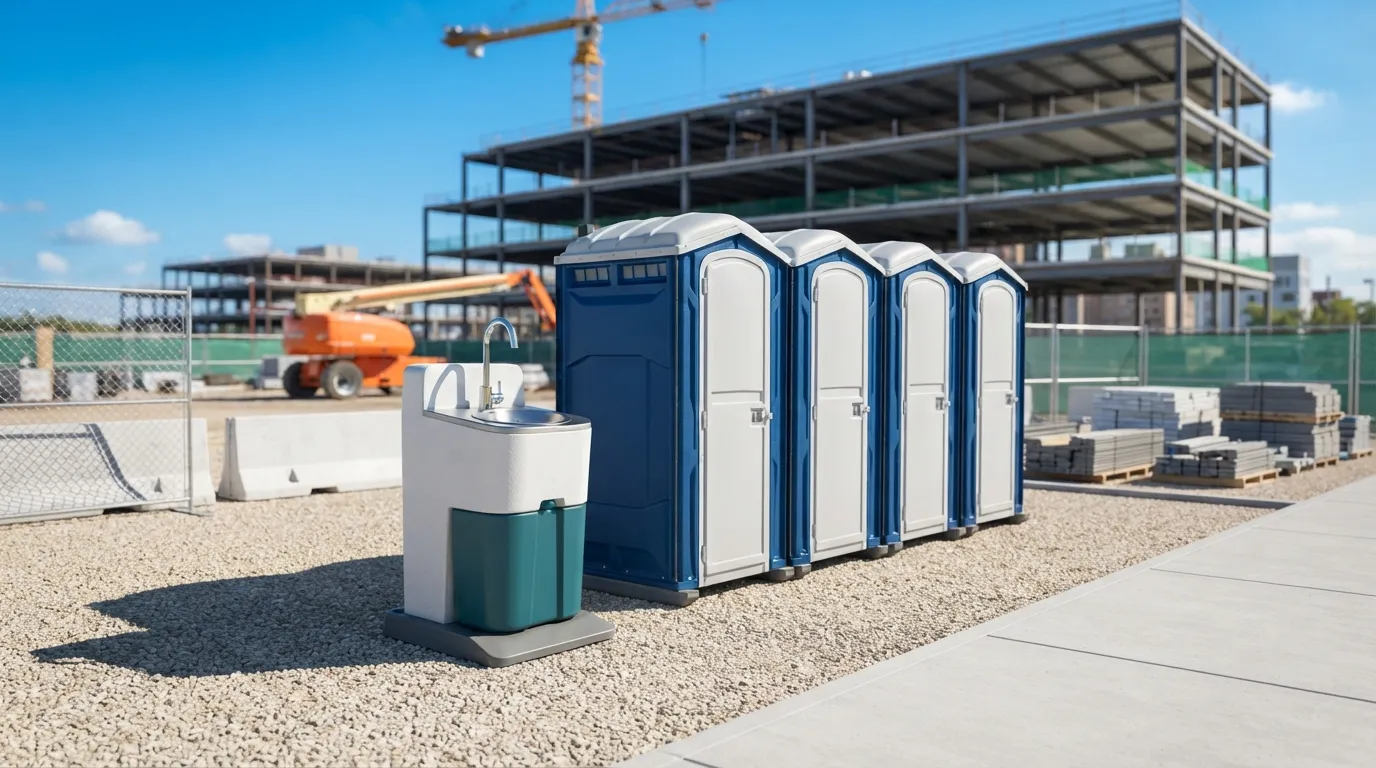
Liquid paint, motor oil, solvents and pesticide containers cannot go in the bin, wet or dry. Dried latex paint in an open can is sometimes accepted, but check first rather than guessing. If a crew has been applying paints, coatings or insecticides on site, OSHA 1926.51(f)(1) requires washing facilities for that work, since those materials count as contaminants under that rule. That is a separate requirement from dumpster loading, but the two often show up on the same jobsite. A handwashing station rental or a portable sink rental covers that need without adding a second delivery fee, and pairing it with handwashing requirements info keeps the crew lead from guessing. For sites with heavier chemical use, an emergency porta potty rental or a full look at construction site services in Santa Maria is worth a call before the dumpster even arrives.
Where do banned items actually go instead?
Most cities route paint, batteries and electronics to a household hazardous waste facility, not the regular trash stream. Santa Maria Porta Pros does not haul those categories in a roll-off, and no reputable hauler operating near Santa Maria will either, since it puts their landfill contract at risk. Tires usually go back to a tire shop or a dedicated recycler. Appliances with refrigerant need a certified technician to remove the coolant first. If you are unsure whether your city requires a placement permit for the dumpster itself, that is worth confirming with Santa Maria directly. Check dumpster permit requirements before delivery day, since rules on where a bin can sit in a driveway or on the street differ by city and were not part of what we could verify here. For general cost planning once you know what is going in the bin, see dumpster rental cost in Santa Maria.
| item category | allowed in standard roll-off | typical alternative |
|---|---|---|
| construction debris | yes | none needed |
| household trash | yes | none needed |
| paint (liquid) | no | hazardous waste facility |
| tires | no | tire shop or recycler |
| refrigerant appliances | no | certified technician removal |
| batteries, electronics | no | hazardous waste facility |
What happens if banned material is found in my dumpster?
The hauler can refuse the load or charge a contamination fee before it leaves the yard. This is more common on a 40 yard dumpster filled by multiple crews over several days, since nobody tracks every item going in. Sorting as you load is cheaper than sorting after the fact.
Can I put old furniture or mattresses in a roll-off?
Yes, in most cases. Furniture and mattresses are bulky but not hazardous, so they load fine in a 30 yard dumpster or larger. Weight still counts, so check limits if you are combining furniture with heavier debris like tile or concrete.
Does yard waste count as banned material?
No, yard waste is generally fine for a standard dumpster, though wet soil and large tree stumps add weight fast. If the job is mostly landscaping debris, a smaller bin often works better than assuming you need 20 yard dumpster capacity from the start.
Is wet concrete allowed in the bin?
No. Wet concrete is too heavy and can damage the container. Cured, broken concrete is usually fine in smaller quantities, but call ahead since it counts heavily against weight limits on any size bin.
What if I am not sure an item is allowed?
Call before you load it. Santa Maria Porta Pros would rather answer a two minute question than reject a full bin at pickup. A quick check saves the contamination fee and the delay of a second delivery.
Next step
Get a delivery date
Tell us the address, the dates and the headcount. We size the order and confirm the route.