
Why do porta potties smell?
Smell comes from three things: tank fill level, heat, and time since the last service. A standard unit holds a 60 to 70 gallon tank, and once that tank climbs past the halfway mark, odor starts working its way up through the vent stack faster than the deodorizer can chase it back down. Santa Maria's coastal-influenced days run mild most of the year, which actually helps compared to inland heat, but a unit parked in direct sun on an asphalt lot in Orcutt, 6.7 miles south, will still cook faster than one in shade. How often are porta potties cleaned matters more than any deodorizer packet. The industry baseline from ANSI/PSAI Z4.3 calls for one service visit a week for up to 10 users across a 40 hour week. Push past that ratio, or skip a week, and smell creeps in regardless of unit quality. If you are trying to figure out the right count for your event or job site, how many porta potties do I need walks through the math.
Does a deluxe or flushable unit smell less?
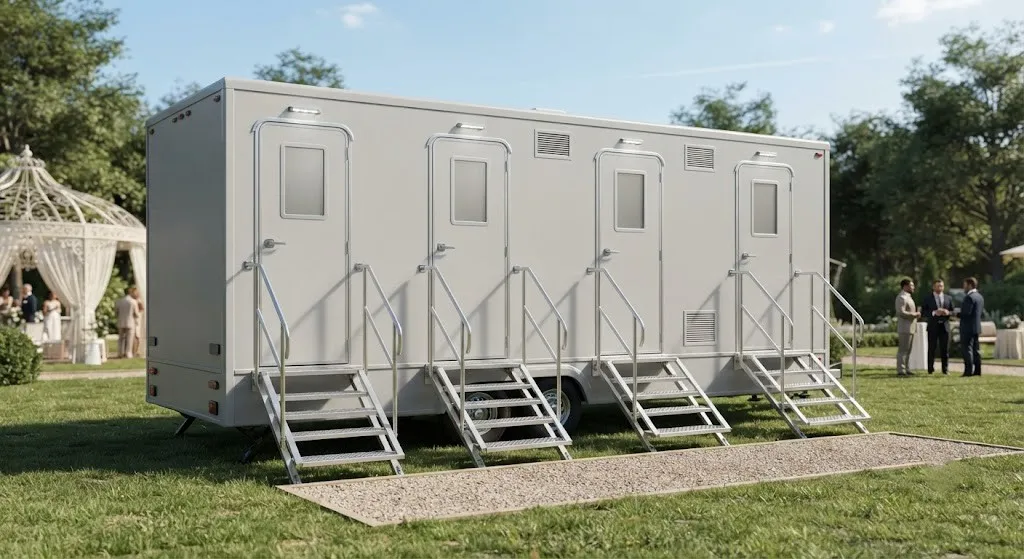
Yes, noticeably. A deluxe flushable porta potty uses a flush mechanism and a fresh water rinse that pushes waste down and away from the seat area, which is where most of the smell actually escapes a standard unit. Standard units rely on a chemical charge sitting still in the tank, and that charge does its job but it is a passive system. For weddings, especially, the smell difference is worth the upgrade; check wedding restroom rental or event restroom rental for what fits a guest list. A restroom trailer rental goes a step further with flush toilets and sink basins, and for higher-traffic events like a festival restroom rental or county fair restrooms setup, the added ventilation in a trailer keeps odor from building the way it can in a tight cluster of standard units. An 8 stall restroom trailer or 4 stall restroom trailer spreads traffic out too, which reduces the load on any single tank.
Where should I place a unit to cut down on smell?
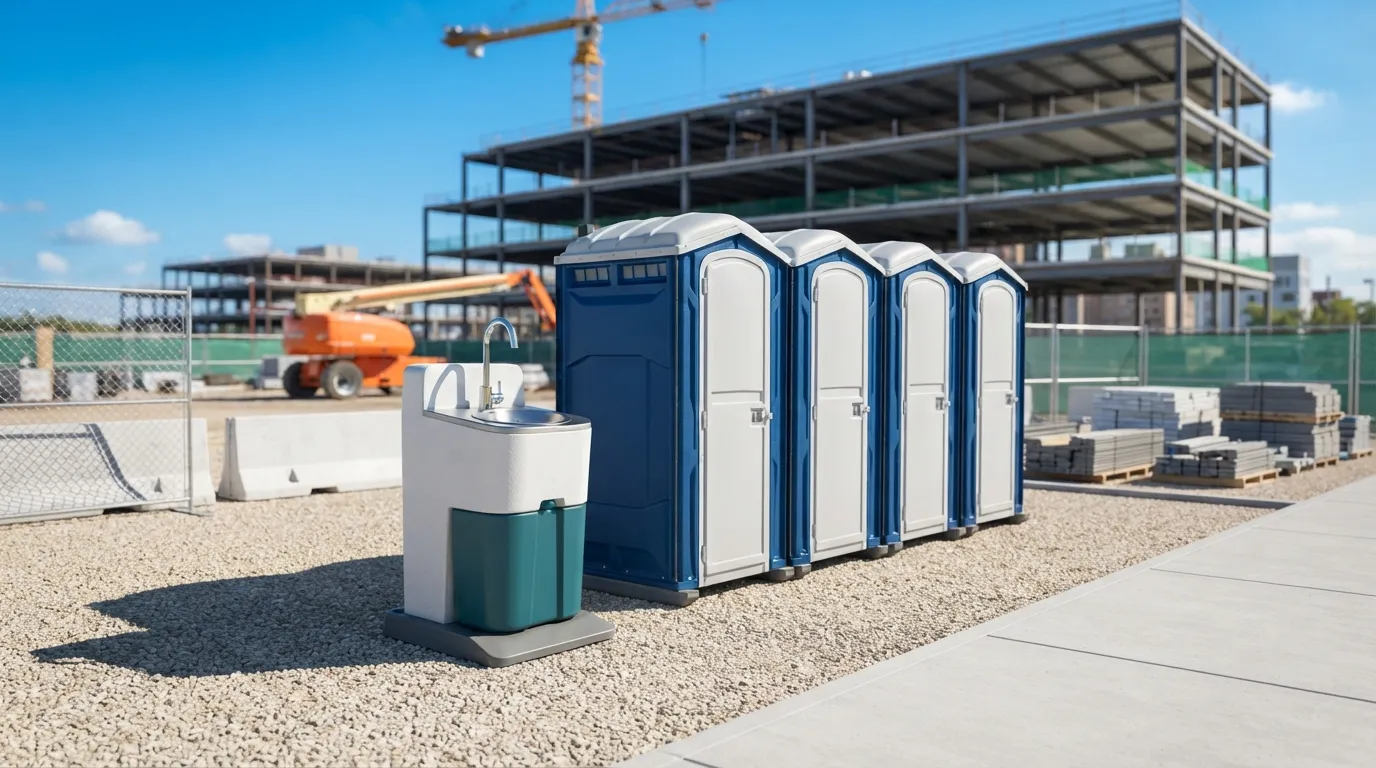
Placement matters as much as the unit itself. Keep units out of full sun where you can, away from entrances and seating, and downwind of the main gathering area if there's a prevailing breeze. Our porta potty placement guide covers ground clearance and access needs in more detail. A standard unit runs about 44 by 48 inches on the ground and stands roughly 92 inches tall, so it does not need much footprint, but it does need stable, firm, slip-resistant ground per ADA Standards section 302.1 if an accessible unit is part of the layout. For jobsites, OSHA 1926.51(c) sets the toilet ratio construction crews need to follow: one facility for 20 workers or fewer, then one toilet seat and one urinal per 40 workers beyond that. Crews running near Guadalupe, 9.3 miles west, or Nipomo, 10.3 miles northwest, follow the same OSHA math regardless of city line. If your site sits in the public right of way, placement needs confirming directly with the City of Santa Maria; check porta potty permit requirements before you set a unit at the curb.
Can regular servicing really stop the smell?
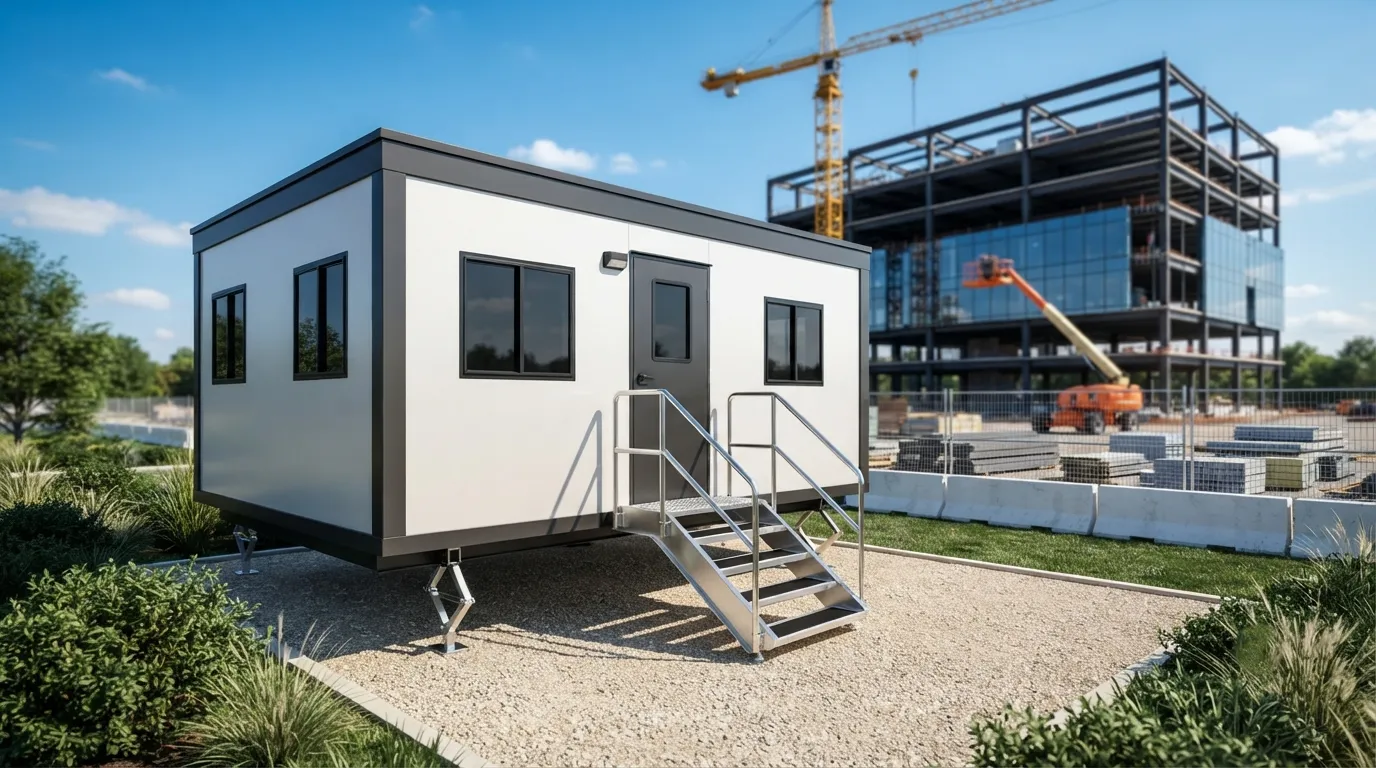
Yes, this is the single biggest lever a renter has. A tech pumps the tank, refills the chemical charge, restocks paper, and rinses the interior each visit. Skipping a scheduled pump-out is the number one reason a unit starts smelling bad, more than unit age or even weather. How do porta potties work explains the chemical breakdown process if you want the mechanics. If you are running a longer job, monthly porta potty rental plans typically bundle a set number of service visits, and it is worth confirming that count matches your headcount using OSHA 1926.51(c) as your floor, not your target. Handwashing is a separate issue from tank odor, but it matters for site hygiene overall; 29 CFR 1910.141(d)(2) requires soap and a towel or drying device, not sanitizer alone, so pairing a unit with a handwashing station rental or portable sink rental keeps the whole setup cleaner. If you're doing any painting, coating, or pesticide work on site, OSHA 1926.51(f)(1) requires washing facilities specifically for that contaminant exposure.
Pricing snapshot for Santa Maria rentals
| Unit | Day | Week | Month |
|---|---|---|---|
| Standard | $100 - $350 | $130 - $500 | $125 - $325 |
| ADA accessible | $200 - $400 | $200 - $240 | - |
| Deluxe flushable | $85 - $1,200 | $150 - $290 | - |
See porta potty rental cost and porta potty rental per day for the full breakdown by use case.
Do porta potties always smell bad?
No. A unit serviced weekly, per the ANSI/PSAI Z4.3 baseline, and not overloaded past its user ratio should have minimal odor. Heat, sun exposure, and skipped service visits are what cause the strong smell people associate with portable toilets generally.
Does adding more units reduce smell?
Yes, spreading out usage per unit reduces tank fill speed, which cuts down odor buildup. Use how many porta potties do I need to size correctly for your headcount and event length before you book.
Are deluxe units worth it just for the smell factor?
For events with several hours of continuous use, yes. The flush and rinse system in a deluxe flushable porta potty handles odor noticeably better than a standard chemical-tank unit, especially in warmer months.
Can I request extra servicing mid-rental?
Most rentals allow adding a service visit if a job runs longer or hosts more people than planned. Ask about this when you request a quote, especially for multi-week jobsite rentals in Santa Maria.
Does winter weather change how porta potties smell?
Cooler temperatures slow bacterial activity in the tank, which usually means less odor. See porta potty in winter for how cold weather affects servicing and unit performance overall.
Next step
Get a delivery date
Tell us the address, the dates and the headcount. We size the order and confirm the route.