
How Much Does Septic Tank Pumping Cost?
Most homeowners pay within the day-rate band for a standard pump-out, and that number holds whether you're on a quarter acre lot in town or out toward Orcutt, 6.7 miles south. The price moves based on how hard the tank is to reach, how full it is, and whether the crew hits solids that slow the job down. A residential septic tank is typically pumped every 3 to 5 years, driven by tank size and household size, so the cost is really a once-every-few-years line item, not a monthly one. If you're comparing this to portable sanitation spending on a job site, the two markets don't overlap much, but the septic pumping service page breaks down how routine visits get scheduled. Grease traps run on a different clock entirely: a grease interceptor gets pumped once fats, oils, grease and solids reach 25 percent of the liquid depth, which is a fill-level trigger, not a calendar date. Restaurants and food trucks working near Santa Maria should check the grease trap pumping page for that distinction before assuming residential pricing applies.
What Drives Septic Tank Cleaning Prices Up or Down?
Access is the biggest swing factor. A tank buried under a deck, or one with a lid that's been paved over, takes longer to open and costs more than a tank with a clean riser and lid at grade. Tank size matters too. A 1,000 gallon tank costs less to pump than a larger commercial unit, and how long since the last service changes what's actually in the tank. A tank that's gone 6 or 7 years without service often has more compacted solids, and that adds time on site. Distance from Santa Maria also plays a role for scheduling, not a huge one for price, but a property out near Nipomo, 10.3 miles northwest, or Guadalupe, 9.3 miles west, may see a delivery window that differs from an in-town appointment. If your system is showing signs of trouble already, don't wait for the standard interval; the septic tank warning signs page covers what to watch for, and the emergency septic service page is there if the tank backs up before its scheduled visit.
How Often Should a Septic Tank Be Pumped?
A residential septic tank is typically pumped every 3 to 5 years, and that range is driven by tank size and household size, not by a fixed calendar. A larger household putting more water and waste through the system will land on the shorter end of that range. A smaller household with a larger tank might stretch closer to 5 years. The how often to pump a septic tank page walks through how to estimate your own interval based on tank size and occupancy. Waiting too long past that window is when solids build up enough to risk a backup, and that's a more expensive problem than a routine pump-out. If you're not sure when the tank was last serviced, that uncertainty alone is a good reason to schedule a check rather than guess. For anyone weighing a full septic tank cleaning against a simple pump-out, the difference usually comes down to whether the tank walls and baffles get scrubbed or just the liquid and solids get removed.

Is a Septic Pump-Out Different From a Holding Tank Service?
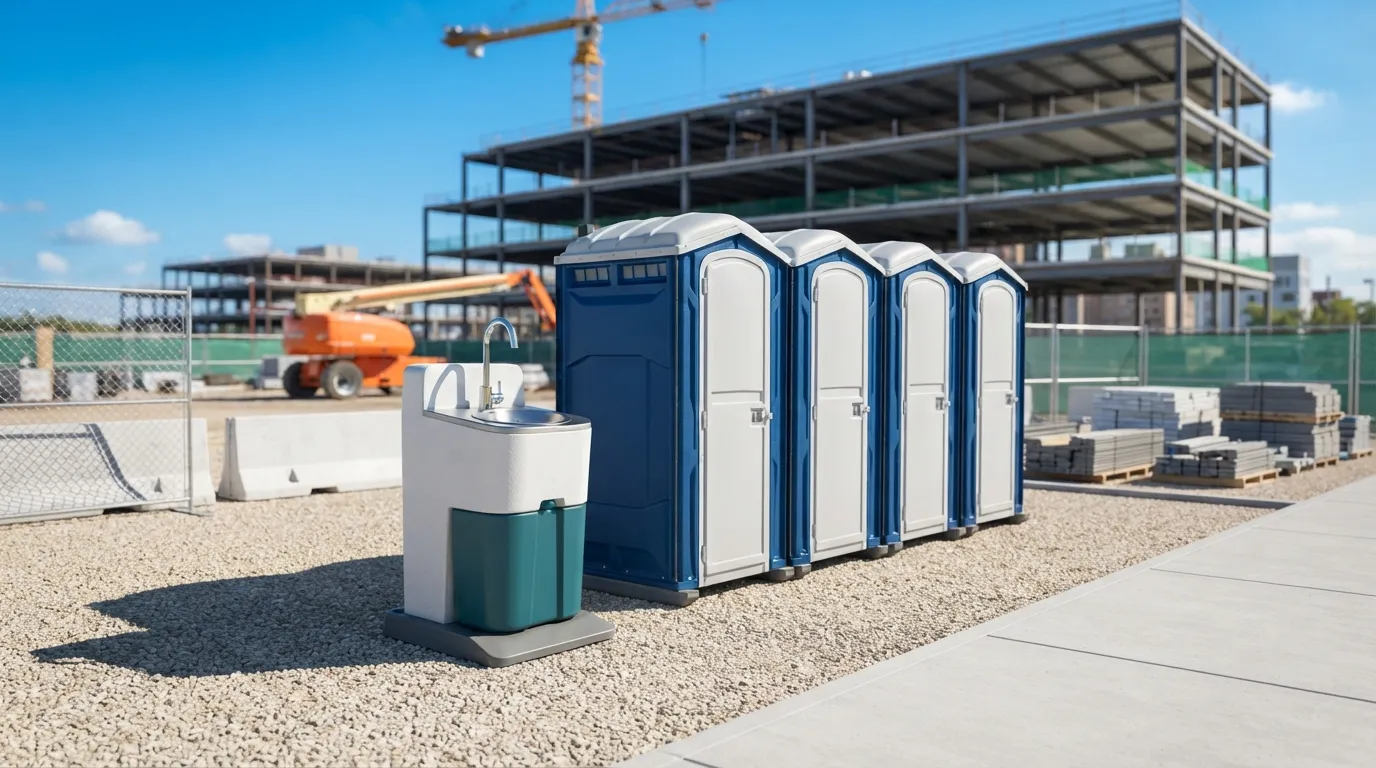
Yes. A septic tank is a fixed, buried system tied to a leach field, while a holding tank is a sealed container with no drainage, often used temporarily on a property without sewer or septic access. Santa Maria properties under construction, or those hosting an event without permanent plumbing, sometimes rent a holding tank rather than pump an existing septic system. The holding tank rental page covers that option, and it pairs naturally with portable restrooms on a job site; see construction site services for how the two get bundled. If your project needs both waste removal and standard toilets, the portable toilet rental and porta john rental pages show what a combined setup looks like. OSHA 1926.51(c) sets toilet counts for construction crews, one facility for 20 workers or fewer, scaling up from there, and that requirement runs independent of whatever septic or holding tank arrangement the property itself has.
Can I Get Emergency Septic Pumping Near Santa Maria?
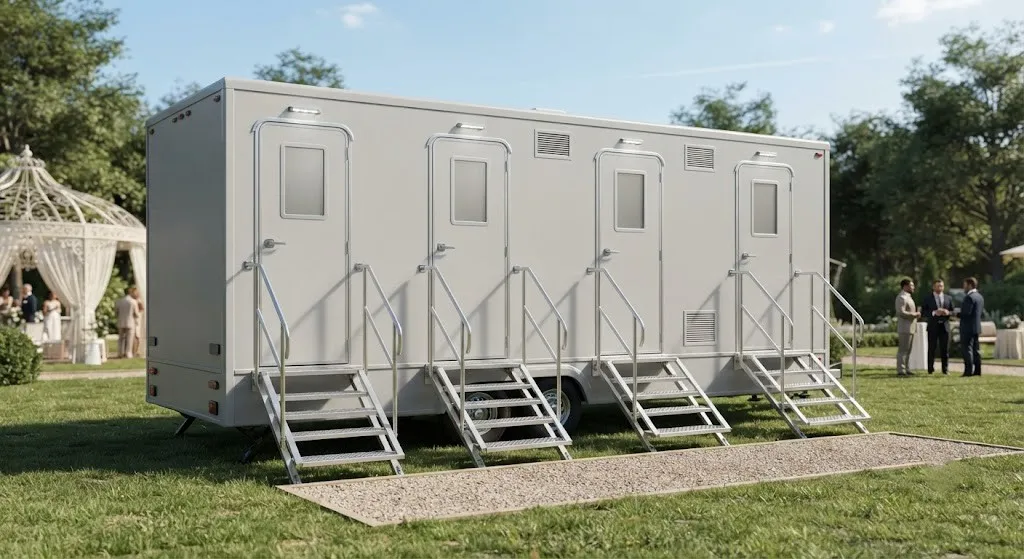
Yes, and it's priced differently than a scheduled visit. A weekend septic call runs 50 to 150 dollars in Santa Maria, reflecting the faster turnaround needed when a tank backs up on a Saturday instead of during a normal weekday slot. The emergency septic service page covers what counts as urgent versus what can wait for standard scheduling. Homeowners near Arroyo Grande, 17.6 miles northwest, or Lompoc, 25.7 miles south, should expect the same pricing structure, though drive time affects how fast a crew can get there. If the backup is tied to a grease trap rather than a residential tank, that's a separate service; check grease trap pumping instead. And if the emergency is really about a lack of toilets rather than a failed tank, the emergency porta potty rental page solves that faster than any septic dispatch could.
| service | duration | low | typical | high |
|---|---|---|---|---|
| septic pumping | day | 150 | 250 | 300 |
| septic pumping | weekend | 50 | 100 | 150 |
How much does a 1,000 gallon septic tank pumping cost?
A 1,000 gallon tank falls into the standard day-rate range of 150 to 300 dollars in Santa Maria. Where it lands in that range depends on access, how full the tank is, and how long since the last service. Weekend jobs run 50 to 150 dollars instead.
How often does a septic tank actually need pumping?
Every 3 to 5 years for most residential tanks, driven by tank size and household size. Larger households or smaller tanks push toward the 3 year end. The how often to pump a septic tank page has more detail on estimating your own interval.
What's the difference between septic pumping and septic cleaning?
Pumping removes the liquid and solids from the tank. Cleaning, covered on the septic tank cleaning page, can include scrubbing tank walls and inspecting baffles. Ask which service you're quoted before assuming they're the same job.
Do I need a permit to have my septic tank pumped in Santa Maria?
Pumping itself typically doesn't need a permit, but rules vary by situation. If your project involves new construction or major site work, check the porta potty permit requirements page for related guidance, and confirm anything specific with the city directly.
Is emergency septic service more expensive than scheduled pumping?
Yes. A weekend emergency call runs 50 to 150 dollars, while a scheduled day visit runs 150 to 300 dollars, since pricing reflects urgency and timing rather than tank size alone. See emergency septic service for details.
Next step
Get a delivery date
Tell us the address, the dates and the headcount. We size the order and confirm the route.