
How many restrooms does a race need?
Race sanitation math starts with OSHA 1926.51(c), the construction ratio of 1 toilet per 20 workers, which race directors use as a rough floor even though runners aren't a job site crew. In practice a 500-runner race does better with units placed by density at the start line, the finish chute and every aid station past mile 3, rather than one big bank near registration. How Many Porta Potties Do I Need walks through the math by headcount and event length in more depth.
Every cluster of standard units needs an accessible option under ADA Standards section 213.2, which requires at least 5 percent of clustered single-user units to be accessible, never fewer than one. We spec ADA accessible units with a 60 inch turning circle inside per ADA Standards 304.3.1, and a door opening of at least 32 inches per ADA Standards 404.2.3, so wheelchair racers and spectators aren't stuck. For a full breakdown of what a compliant layout looks like, see ADA Restroom Requirements.
Placement matters as much as count. Units need firm, level, slip-resistant ground per ADA Standards section 302.1, which rules out loose gravel or soft turf at a lot of Santa Maria course sites. Our porta potty placement guide covers clearance and ground prep, and if your finish line runs near event lighting or a sound system, our crews can talk through how to brace a temporary power pole so it doesn't get knocked over by a water station line or a course marshal's pop-up tent. That question comes up more than people expect once folks start staking out cable runs near the temporary power pole and light tower setups we bring for early morning starts.
What restroom package fits a Santa Maria race course?
Course layout drives the package. A loop course through downtown Santa Maria can run standard units at the start/finish and a few aid stations, while an out-and-back toward Orcutt, 6.7 miles south, needs restrooms staged at the turnaround too, since runners won't backtrack for one. If your course stretches toward Guadalupe, 9.3 miles west, or up near Nipomo, 10.3 miles northwest, we plan delivery routes around those distances so units land before dawn setup.
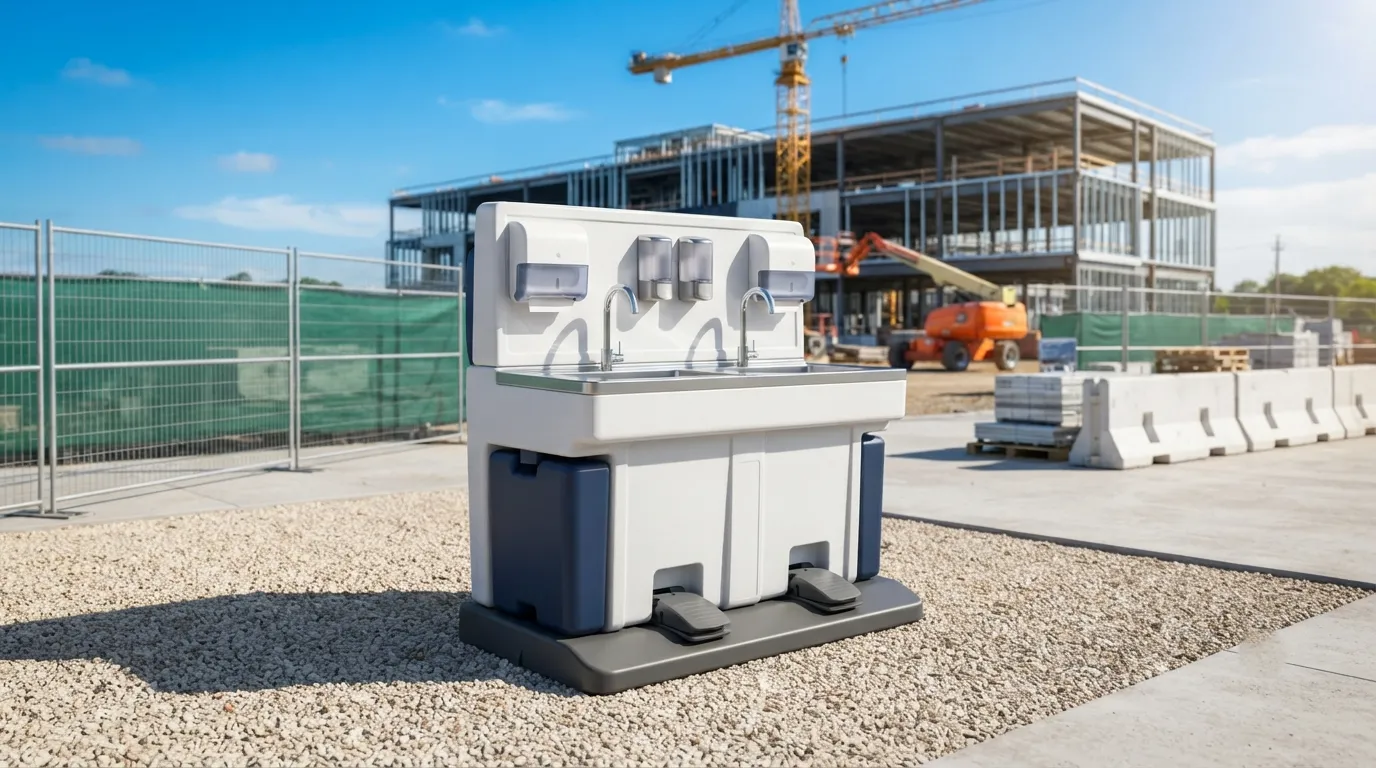
Bigger races with VIP tents or a finish-line party sometimes add a restroom trailer instead of stacking standard units, especially the 2 stall size for smaller finish areas. For a race with a beer garden or sponsor row, our deluxe flushable option handles higher traffic without the smell issues cheaper units get after four hours of steady use. Hand hygiene matters too: 29 CFR 1910.141(d)(2) calls for soap and towels or a hand-drying device at wash stations, not just sanitizer, so we pair units with real handwashing stations rather than gel dispensers alone. See handwashing station requirements for what that means on race day.
| package | duration | typical price |
|---|---|---|
| standard unit | weekend | $250 |
| ada unit | weekend | $240 |
| deluxe flushable | weekend | $250 |
| delivery fee | weekend | $200 |
Prices above sit inside our measured range from actual bookings; a course with tighter delivery windows or after-hours pickup can run higher. Full detail lives on porta potty rental cost and porta potty rental per day if you're comparing against a single-day permit event.
When should we book restrooms for a race?
Book 2 to 3 weeks before race day, sooner if your course overlaps a weekend with a county fair or festival pulling from the same rental fleet. Santa Maria races competing for units against a county fair or festival weekend should lock dates early. Placement in public right of way still needs confirming with the city; we don't guess at that and recommend checking with Santa Maria's permitting office directly rather than relying on a generic rule. Our porta potty permit requirements page explains what to ask about.
If your race grows past initial estimates, or weather forces a last-minute course change, emergency porta potty rental covers rush placement. We also service marathon and comparable golf tournament events with the same crew, so questions about servicing mid-race are common; see how often are porta potties cleaned for the standard interval, based on ANSI/PSAI Z4.3's baseline of one service visit per week for up to 10 users over 40 hours, adjusted up for race-day volume.
How far in advance do we need to reserve units for a race?
Two to three weeks is standard, earlier if your date overlaps a fair or festival competing for the same fleet. Rush orders are possible through emergency porta potty rental but cost more and depend on what's already committed.
Do we need ADA units even for a small local race?
Yes. ADA Standards section 213.2 requires at least one accessible unit per cluster regardless of race size, and Santa Maria courses with wheelchair divisions need it at every aid station, not just the start.
Can restroom trailers work on an unpaved course?
Sometimes. Trailers need stable, level ground and truck access; a grass infield finish line usually works, but soft dirt after rain often doesn't. Ask about your specific course when requesting a quote.
What about handwashing at aid stations?
Standard handwashing stations pair well with water stops. Under 29 CFR 1910.141(d)(2), soap and towels are required, not sanitizer alone, so we bring stations built for that.
How do units get placed on race morning without blocking the course?
Crews deliver before dawn using porta potty placement guide principles, keeping units off the running line and clear of any temporary power pole or light tower cable runs.
Next step
Get a delivery date
Tell us the address, the dates and the headcount. We size the order and confirm the route.